
Shoulder pain can start for many different reasons. A shoulder may hurt because of a tendon problem, muscle strain, joint changes, repetitive activity, an injury, or reduced mobility. In some cases, several factors may contribute at the same time.
If you are searching for what causes shoulder pain, the symptoms alone may not tell you exactly what is happening. Different shoulder conditions can cause similar pain, stiffness, weakness, or difficulty moving the arm. For people in New York City, understanding the possible causes can help you know when a professional shoulder evaluation may be useful.
What Causes Shoulder Pain?
Shoulder pain can come from the muscles, tendons, joints, bursae, or other structures that help the shoulder move. Daily activities, work demands, sports, repetitive movements, and injuries can all play a role.
Some problems develop gradually. Others may begin after a specific movement or injury. Age-related changes can also affect the shoulder joint and surrounding tissues.
The location, timing, severity, and type of pain can provide useful information, but they do not always identify the exact cause on their own. A professional evaluation can help connect your symptoms with your movement and physical findings.
Common Causes of Shoulder Pain
Rotator Cuff Problems
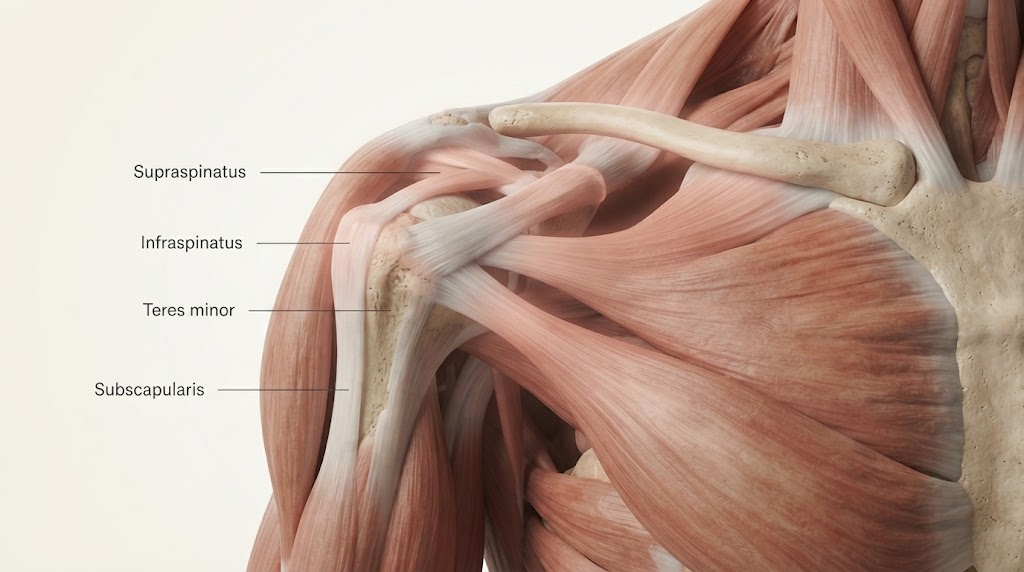
The rotator cuff is a group of muscles and tendons that helps stabilize and move the shoulder. Irritation, inflammation, or injury involving these tissues may cause pain and weakness.
Rotator cuff problems can develop from repeated use, changes in the tendon, or an injury. Symptoms can vary from mild discomfort to difficulty using the arm normally.
For more information about recognizing a possible tear, see How do I know if I tore my rotator cuff?
Tendon Problems
Tendons connect muscles to bones and help transfer force during movement. Repeated loading or irritation can affect a shoulder tendon and lead to pain.
Activities that involve repeated arm movements may place extra stress on these tissues. Tendon-related shoulder pain may also occur without one obvious injury.
Bursitis
A bursa is a small fluid-filled sac that helps reduce friction between moving tissues. When a shoulder bursa becomes irritated, it may contribute to pain and tenderness.
Bursitis can occur alongside other shoulder problems, which is one reason similar symptoms do not always point to a single condition.
Frozen Shoulder
Frozen shoulder involves increasing stiffness and reduced movement of the shoulder. Simple movements may become difficult as mobility decreases.
The condition can develop gradually, and the amount of stiffness may be more noticeable than the pain in some people. A professional assessment can help determine whether restricted movement may be related to frozen shoulder or another shoulder problem.
Shoulder Impingement
Shoulder impingement describes a situation where tissues in the shoulder can become compressed or irritated during certain movements.
Pain may occur when the arm moves through particular positions. However, similar movement-related symptoms can occur with other shoulder conditions, so an assessment is needed to understand the underlying problem.
Arthritis and Joint Problems
The shoulder joint can also be affected by arthritis and other joint-related changes. These problems may cause pain, stiffness, reduced mobility, and difficulty with certain activities.
Joint-related symptoms can develop gradually and may change over time. A healthcare professional can evaluate the shoulder joint along with the surrounding muscles and tendons.
Muscle Strains and Overuse
A muscle strain can happen when muscle tissue is overstretched or overloaded. Repeated activity can also place stress on the muscles around the shoulder.
Overuse may be linked to work, exercise, sports, lifting, or repeated arm movements. The shoulder may become sore, stiff, or uncomfortable after activity.
Injuries and Other Causes
A shoulder injury can affect different structures, including muscles, tendons, ligaments, and joints. A sudden force, awkward movement, or direct impact may contribute to shoulder pain.
Not every case starts with a clear injury. Changes in activity, reduced mobility, movement habits, and repeated physical demands may also contribute.
If pain begins suddenly after an injury, it is reasonable to have the shoulder evaluated rather than trying to determine the cause from symptoms alone.
For information about shoulder pain after an injury, see: shoulder pain after a fall.
What Symptoms Can Come With Shoulder Pain?
Shoulder pain symptoms can vary based on the tissues involved and the activity that aggravates them.
Common symptoms may include:
Pain when moving the arm
Shoulder stiffness
Weakness
Limited range of motion
Tenderness
Swelling
Discomfort during certain activities
Pain that continues or changes over time
Some people may notice difficulty reaching, lifting, carrying, or performing normal daily activities. Others may mainly notice stiffness or weakness.
Symptoms can overlap between different shoulder problems. For example, limited movement may occur with several conditions, while pain with activity can have more than one possible cause.
This is why a symptom should not automatically be treated as proof of a specific condition.
What Can Make Shoulder Pain Worse?
Certain activities can increase stress on the shoulder and make existing symptoms more noticeable.
Common contributors include:
Repetitive arm movements
Overuse
Certain shoulder movements
Poor movement patterns
Limited mobility
Physically demanding work
Sports and exercise
Repeated lifting or carrying
Work can also affect symptoms. Someone who performs repetitive tasks with the arms may notice discomfort after a long day, while an athlete may experience symptoms after training.
Some people notice more pain at night, while others notice symptoms mainly during activity. These patterns can provide useful information during an evaluation, but they do not identify a condition by themselves.
For a separate look at sleep-related symptoms, see: Why Does My Shoulder Hurt When I Sleep?
When Should Shoulder Pain Be Evaluated?
Not every episode of shoulder soreness requires professional care. Mild discomfort may improve if you reduce the activity that caused it.
A professional evaluation may help if pain persists, worsens, or starts to interfere with normal activities.
Consider having your shoulder evaluated if you experience:
Persistent shoulder pain
Increasing symptoms
Reduced shoulder movement
Noticeable weakness
Difficulty with daily activities
Symptoms that follow an injury
Shoulder pain that does not improve as expected
People in New York City may seek a shoulder evaluation when ongoing pain starts affecting work, exercise, household tasks, or other daily activities.
Metro Wellness provides shoulder pain care in NYC for people who want their symptoms and movement evaluated. A professional can review your history, examine the shoulder, and help determine what type of care may be appropriate.
How Is Shoulder Pain Evaluated?
A shoulder evaluation usually starts with questions about your symptoms and how they began. The healthcare professional may ask about activities that increase or reduce your discomfort, previous injuries, and changes in your ability to use the shoulder.
The physical evaluation may include:
Checking shoulder range of motion
Testing strength
Observing movement patterns
Checking for tenderness
Reviewing functional limitations
Performing a physical examination of the shoulder
The findings help provide a clearer picture of what may be contributing to the symptoms.
Not every person with shoulder pain needs imaging or the same type of testing. The appropriate next step depends on the symptoms and findings from the evaluation.
How Physical Therapy May Help With Shoulder Pain
Physical therapy may be part of care for some types of shoulder pain. The approach depends on the person's symptoms, movement limitations, strength, activity level, and the underlying problem.
A physical therapist may assess how the shoulder and surrounding areas move and then develop an exercise or rehabilitation plan based on those findings.
Care may include:
Movement assessment
Mobility exercises
Strength exercises
Functional movement training
Activity-specific exercises
Shoulder rehabilitation
The goal is to address the movement and physical limitations identified during the evaluation rather than treating every case in the same way.
For people looking for shoulder pain treatment in NYC, Metro Wellness offers physical therapy services that can be considered as part of an individualized care plan.
Conclusion

There are many possible answers to the question of what causes shoulder pain. Rotator cuff problems, tendon irritation, bursitis, frozen shoulder, arthritis, muscle strain, overuse, injuries, and joint problems can all contribute to shoulder symptoms.
Because different conditions can produce similar symptoms, persistent pain, weakness, or reduced movement may be worth a professional evaluation. For people in NYC contact Metro Wellness which can provide shoulder pain evaluation and physical therapy care based on individual needs.
FAQs
Can shoulder pain happen without an injury?
Yes. Shoulder pain does not always follow a specific accident or injury. Repetitive activity, overuse, tendon irritation, joint changes, muscle strain, and reduced mobility may contribute to symptoms. If pain continues or affects normal movement, a healthcare professional can evaluate the shoulder and help identify possible contributing factors.
What are some common reasons for shoulder pain?
Shoulder pain may be related to muscles, tendons, joints, bursae, or other surrounding tissues. Common contributors include rotator cuff problems, tendon irritation, bursitis, frozen shoulder, arthritis, muscle strain, overuse, and injuries. Similar symptoms can occur with different conditions, so the cause cannot always be determined from pain alone.
Can shoulder pain come from a tendon problem?
Yes. Tendons around the shoulder help connect muscles to bones and support shoulder movement. Repetitive activity, increased physical demands, or an injury may irritate a tendon. Tendon-related pain can resemble symptoms from other shoulder problems, so a physical examination can help determine what may be contributing to the discomfort.
When should persistent shoulder pain be evaluated?
Persistent shoulder pain may be worth evaluating when it does not improve, becomes worse, limits movement, causes weakness, or interferes with daily activities. Symptoms that begin after an injury may also warrant professional evaluation. An assessment can help identify movement limitations and determine whether further care may be appropriate.
Can physical therapy be used for shoulder pain?
Physical therapy may be used for some types of shoulder pain. Treatment can focus on mobility, strength, movement patterns, exercises, and functional activities based on the individual's findings. The type of therapy depends on the cause and severity of the problem. A physical therapist can determine whether therapy is appropriate after an evaluation.