Why Knee Pain Treatment Costs Vary in Midtown Manhattan?

Knee Pain Treatment Costs Vary in Midtown Manhattan
If you’ve ever tried to compare knee pain treatment costs in Midtown Manhattan, you’ve probably noticed something confusing: the numbers don’t line up. One clinic quotes a certain rate. Another lists something entirely different. Some talk about packages, others bill per visit, and insurance estimates seem to shift depending on the provider.
It’s easy to assume that pricing is inconsistent or arbitrary. In reality, the cost of knee pain treatment reflects a combination of clinical, logistical, and insurance-related factors. Midtown Manhattan adds its own unique variables, from overhead expenses to the type of patients being treated.
Understanding what actually drives knee pain treatment pricing helps you make informed decisions. Instead of focusing only on the number attached to a single visit, it’s more helpful to look at the bigger picture: diagnosis, treatment plan, frequency, provider experience, and insurance structure.
Not All Knee Pain Is the Same
One of the biggest factors affecting knee pain treatment cost is the condition itself.
“Knee pain” is a broad term. It can include:
Acute ligament sprains
Meniscus irritation
Patellar tracking issues
Tendon inflammation
Osteoarthritis
Post-surgical rehabilitation
Each of these conditions requires a different level of care.
For example, a mild overuse injury may respond quickly to targeted therapy and exercise guidance. In contrast, chronic degenerative changes may require a longer, structured plan involving manual therapy, strength progression, and possibly supportive modalities.
The more complex the condition, the more involved the treatment, and that directly influences knee pain treatment costs.
The Role of Accurate Diagnosis
Proper evaluation at the start of care often determines overall knee pain cost management.
An initial visit typically includes:
A detailed health history
Movement assessment
Strength and mobility testing
Review of prior imaging (if available)
Development of a personalized plan
This early clarity prevents unnecessary sessions later.
When knee pain is misidentified, for example, by treating only symptoms without addressing hip weakness or gait mechanics, treatment can drag on longer than necessary. That increases both time and expense.
A thoughtful diagnosis may carry a slightly higher upfront fee, but it often reduces total knee pain cost therapy in the long run.
Midtown Manhattan Overhead
Healthcare costs in Midtown Manhattan reflect the realities of operating in one of the busiest commercial districts in the country.
Clinics here account for:
High commercial rent
Licensing and compliance expenses
Administrative staffing
Insurance credentialing
Professional liability coverage
These operational costs are built into knee pain treatment pricing.
While Midtown rates may differ from outer boroughs or suburban clinics, they also often reflect access to experienced providers, convenient scheduling, and modern facilities.
Location alone doesn’t determine value, but it does shape pricing.
Insurance Coverage and Out-of-Pocket Responsibility
Insurance plays a central role in how much you personally pay.
Knee pain treatment costs vary significantly depending on:
Deductible status
Copays
Coinsurance percentages
Visit limits
Network status
For someone with a high deductible plan, early visits may be paid almost entirely out-of-pocket. For another patient with a low copay, costs may feel more manageable from the start.
In Midtown, many clinics are in-network with major insurance carriers, but some operate out-of-network. Out-of-network reimbursement can still offset expenses, though patients often pay upfront and submit claims for partial reimbursement.
Understanding your coverage before starting care is essential for realistic knee pain cost management.
Treatment Frequency and Duration
Another key factor affecting knee pain treatment cost is how often you attend sessions.
Many knee conditions require:
1–3 visits per week initially
Gradual tapering as strength and stability improve
Patients sometimes try to reduce frequency to lower short-term expenses. However, spreading sessions too far apart can slow progress.
In clinical practice, consistency early on often leads to:
Faster symptom reduction
Improved joint mechanics
Reduced risk of flare-ups
Fewer total visits overall
This structured approach may feel more intensive upfront, but can reduce total knee pain cost therapy across the full course of care.
Type of Treatment Provided
Not all therapy sessions are identical.
Depending on the provider and the patient’s needs, sessions may include:
Manual therapy
Corrective exercise instruction
Neuromuscular re-education
Movement retraining
Adjunct treatments such as cupping or acupuncture
More comprehensive sessions may carry higher fees but can address multiple contributing factors at once.
It’s important to ask what is included in each appointment. Comparing services, not just price, helps clarify value.
Severity and Chronicity
Acute injuries often respond more quickly than long-standing conditions.
For example:
A recent strain from a workout may improve within several weeks.
Chronic knee pain present for years may require extended strengthening and mobility work.
The longer the pain has been present, the more the body has adapted to it. Muscles compensate. Movement patterns shift. Joint stress accumulates.
Reversing those patterns takes time.
This is one of the most significant factors affecting knee pain treatment cost and one that patients can’t always see at first glance.
Imaging and Specialist Referrals
In some cases, imaging such as X-rays or MRIs may be recommended. Specialist consultations may also be necessary if structural issues are suspected.
While not part of routine therapy fees, these services contribute to the overall cost of knee pain treatment.
Insurance coverage again plays a large role here. Some imaging studies are covered after the deductible; others may require pre-authorization.
A transparent provider will explain when imaging is truly necessary versus when conservative care is appropriate.
Experience and Clinical Judgment
Experienced providers often bring efficiency to care.
They can:
Identify contributing factors quickly
Modify exercises safely
Recognize when a referral is needed
Prevent overuse of unnecessary modalities
While provider expertise may influence pricing, it can also reduce prolonged or ineffective treatment.
In Midtown Manhattan, where many patients are active professionals balancing demanding schedules, efficient care is particularly valuable.
Common Misunderstandings About Knee Pain Treatment Pricing
All Knee Pain Therapy Costs the Same
It doesn’t. Pricing reflects condition complexity, provider training, session length, and insurance factors.
Cheaper Means Better Value
A lower per-session rate may require more visits if care is less targeted.
If I Rest, I’ll Avoid Treatment Costs
While rest may reduce acute irritation, unresolved strength or alignment issues often return, sometimes more intensely.
Practical Ways to Approach Knee Pain Cost Management
If you’re evaluating knee pain treatment costs in Midtown Manhattan, consider these steps:
1. Ask for a Clear Treatment Plan
Understand:
Recommended visit frequency
Estimated duration
Goals for each phase
Signs of expected improvement
Clarity prevents uncertainty.
2. Verify Insurance Benefits
Know your deductible, copay, and visit limits before starting.
3. Commit to Early Consistency
Focused early care often shortens total treatment time.
4. Follow Home Exercise Guidance
Home exercises amplify clinic progress and may reduce total sessions needed.
Expert Perspective: Why Structure Reduces Long-Term Cost?
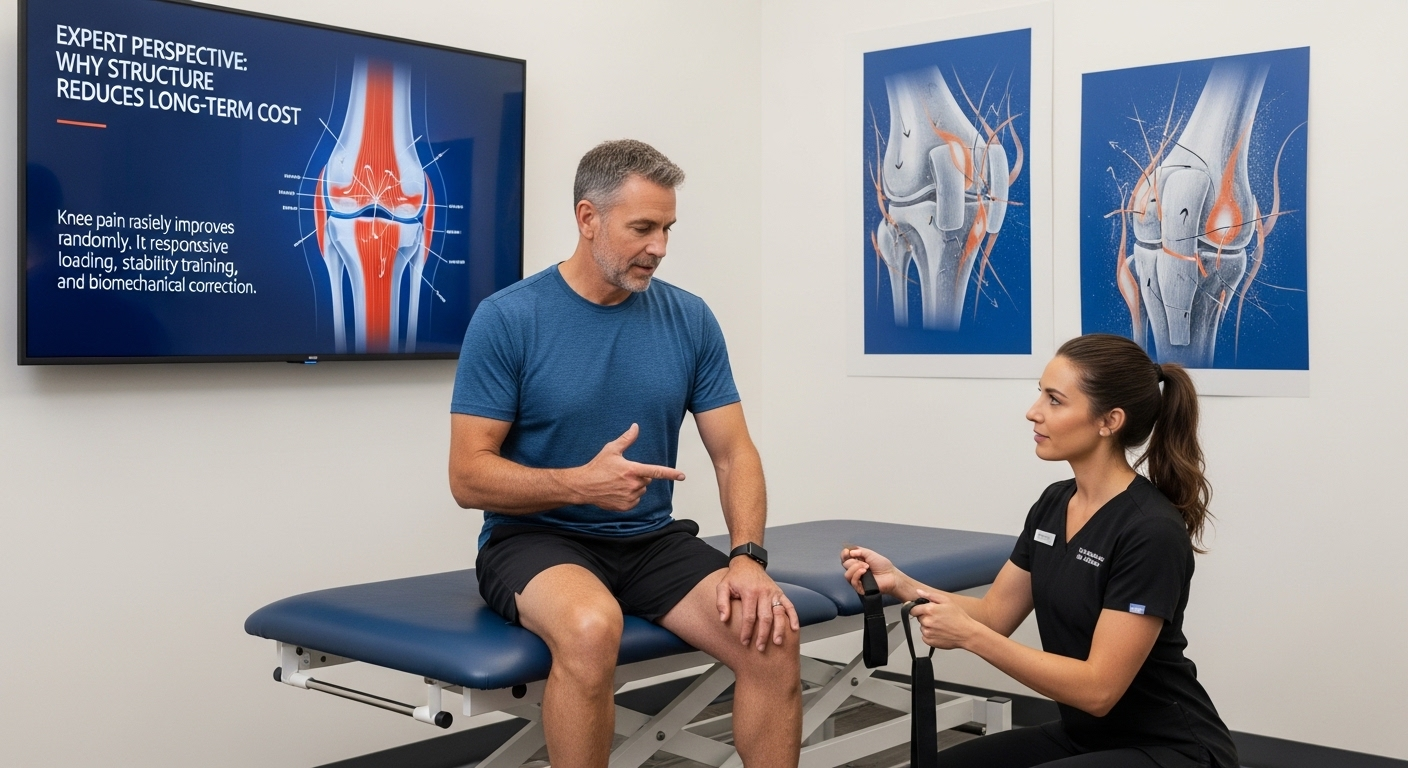
Structure Reduces Long-Term Cost
Knee pain rarely improves randomly. It responds to progressive loading, stability training, and biomechanical correction.
When care is:
Consistent
Measured
Adjusted based on response
Patients often recover more efficiently.
The most expensive scenario is fragmented care, starting and stopping without a clear plan.
In Midtown’s fast-paced environment, structured scheduling and realistic goal setting protect both physical progress and financial investment.
When Costs May Be Lower?
Some scenarios naturally involve lower expenses:
Mild, recent injuries
Strong baseline fitness
Early intervention before compensation patterns develop
Addressing knee pain promptly often reduces total treatment needs.
Delaying care until pain interferes significantly with daily life may increase both complexity and cost.
Putting It All Together
Why do knee pain treatment costs vary in Midtown Manhattan?
Because they reflect:
Condition severity
Diagnostic thoroughness
Provider experience
Session structure
Treatment frequency
Insurance coverage
Midtown operational expenses
Looking only at the price of one visit rarely tells the full story.
The more helpful question is: What plan will resolve this issue efficiently and responsibly?
Conclusion
Knee pain treatment costs in Midtown Manhattan vary for understandable reasons. Different conditions require different levels of care. Insurance structures influence out-of-pocket responsibility. Provider expertise and treatment structure shape overall efficiency.
Rather than focusing solely on price, focus on clarity. A well-designed treatment plan, transparent communication, and consistent follow-through often lead to better outcomes and smarter financial decisions.
If you’re considering care for knee pain, start by asking questions about frequency, duration, and insurance coverage. Informed decisions create confidence, and confidence supports recovery.
Have questions about knee pain treatment or what your plan might look like? Our team is here to help you understand your options and move forward with clarity.
FAQs
1. Why are knee pain treatment costs higher in Midtown Manhattan?
Midtown clinics face higher operational expenses, and pricing reflects location and provider expertise.
2. Does insurance always reduce knee pain therapy costs?
Not immediately. High deductibles may require paying full negotiated rates until the deductible is met.
3. How many sessions are typically needed?
It depends on severity and consistency. Acute cases often resolve faster than chronic conditions.
4. Can spacing out visits lower my overall cost?
Sometimes, but spacing too far apart may slow progress and increase total sessions required.
5. Is imaging always necessary for knee pain?
Not always. Many cases respond to conservative care without advanced imaging.