How do office workers develop forward head posture?
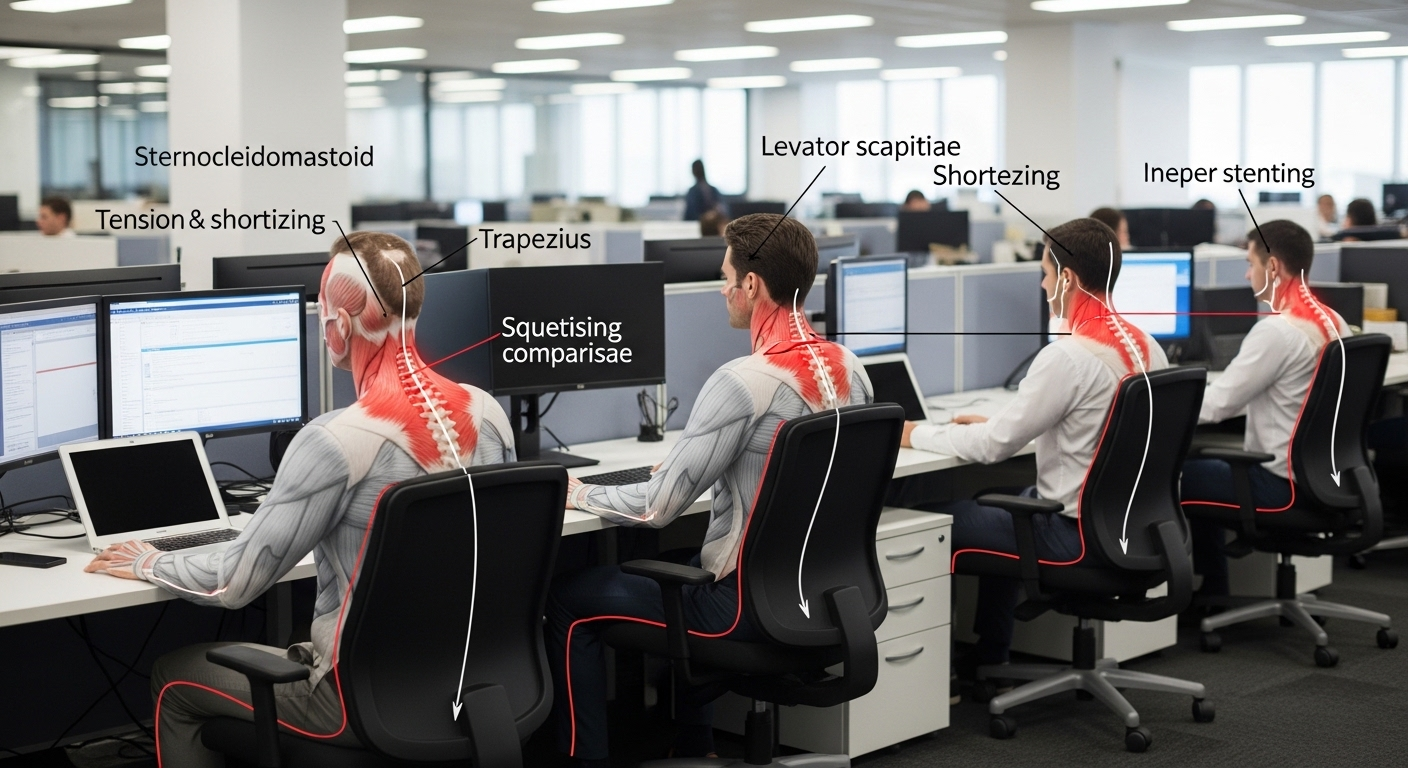
office workers develop forward head
If you spend most of your day at a desk, it’s easy to start leaning forward without realizing it. Phones, laptops, and long hours of focused work push your head forward, often without warning. This subtle change is called forward head posture, and it can have lasting effects on your neck, shoulders, and overall spinal health.
Many people think that neck discomfort is just a normal part of working in an office. In reality, chronic forward head posture can contribute to pain, muscle tension, headaches, and even reduced lung capacity. Understanding why this happens and how to address it can prevent long-term issues and improve daily comfort.
What is Forward Head Posture?
Forward head posture occurs when the head is positioned in front of the body’s natural center of gravity. Ideally, the ears should align with the shoulders when viewed from the side. In forward head posture, the head moves ahead of this line, placing strain on the neck muscles and upper back.
This misalignment increases stress on the cervical spine and surrounding muscles, leading to stiffness, discomfort, and in some cases, chronic pain. Over time, the longer the head stays in this forward position, the harder it is for muscles and joints to return to normal alignment.
Causes of Forward Head Posture
Prolonged Desk Work
Sitting for hours at a desk with monitors positioned too low or far away encourages leaning forward. Even small slouches repeated daily add up over months and years.
Smartphone and Device Use
Texting or scrolling with your head tilted down for long periods increases strain on neck muscles, a phenomenon often called “tech neck.”
Weak Postural Muscles
Poor core and upper back strength contribute to forward head posture. Weak muscles can’t support the head’s weight, causing it to drift forward naturally.
Poor Ergonomics
Chairs without lumbar support, improperly placed keyboards, or low monitors can all promote forward head posture. Even minor adjustments in workstation setup can make a big difference.
Signs You Might Have Forward Head Posture

Signs You Might Have Forward Head Posture
Neck stiffness or soreness after long hours at a desk
Tension or trigger points in the shoulders and upper back
Headaches originating from the base of the skull
Rounded shoulders or a slouched upper back
Feeling fatigued from holding your head forward for extended periods
Health Implications of Forward Head Posture
Forward head posture does more than cause mild discomfort. Over time, it can contribute to:
Chronic neck and shoulder pain. Muscles are under constant strain.
Disc compression. Increased pressure on cervical vertebrae can cause degeneration.
Reduced lung capacity, rounded shoulders, and forward head posture limit chest expansion.
Headaches, tension, and nerve compression can trigger recurring headaches.
Addressing posture early prevents these long-term consequences and keeps your neck and shoulders healthy.
Forward Head Posture Fix: Practical Strategies
Ergonomic Workstation Adjustments
Position monitors at eye level to avoid looking down.
Use chairs with proper lumbar support.
Keep the keyboard and mouse at a height where your shoulders are relaxed.
Posture Awareness
Frequently check alignment: ears over shoulders, shoulders relaxed.
Use reminders or posture apps to stay mindful of your head position.
Stretching and Mobility
Neck stretches: gently tilt the head side to side and forward/backward.
Chest openers: stretch pectoral muscles to counteract rounding.
Shoulder rolls: release tension in upper back muscles.
Strengthening Exercises
Chin tucks: strengthen neck stabilizers.
Upper back rows or band pull-aparts: improve posture-supporting muscles.
Core strengthening: helps maintain overall spinal alignment.
Forward Head Posture Correctors

Forward Head Posture Correctors
Posture braces or correctors can be used temporarily to encourage proper alignment.
These devices should be paired with exercise and posture awareness, not relied on exclusively.
Common Mistakes People Make
Ignoring minor discomfort: Early signs often precede chronic pain.
Over-relying on gadgets: Posture correctors alone do not fix underlying muscle weakness.
Skipping strength work: Stretching alone cannot correct chronic forward head posture.
Incorrect exercise form: Poor technique can worsen strain rather than relieve it.
Expert Perspective
Professionals emphasize that correcting forward head posture requires a combination of awareness, movement, and muscle strengthening. Trigger points in neck and upper back muscles often form from prolonged misalignment. A consistent routine of ergonomic adjustments, mobility work, and strengthening exercises supports lasting improvements.
Healthcare providers can provide individualized guidance, especially for chronic forward head posture that contributes to pain, stiffness, or headaches.
Conclusion
Forward head posture is common among office workers, but its effects extend beyond temporary discomfort. Chronic strain can impact muscles, joints, and overall posture, creating long-term challenges.
Simple strategies like adjusting your workstation, strengthening postural muscles, and practicing mindful alignment can significantly improve neck posture. Regularly incorporating these habits reduces strain, prevents trigger points, and helps maintain a healthy spine.
Awareness is the first step. Consistent movement, proper ergonomics, and targeted exercises allow you to correct bad neck posture over time, improving both comfort and long-term health.
About Us. If forward head posture or neck strain is affecting your comfort or daily function, schedule a consultation to receive personalized guidance on posture correction, ergonomic adjustments, and targeted exercises for long-term neck and spine health
FAQs
1. What is forward head posture? Forward head posture occurs when the head moves in front of the body’s natural alignment, straining neck and upper back muscles.
2. How can I fix forward head posture? Through ergonomic adjustments, posture awareness, stretching, and strengthening exercises for the neck and upper back.
3. Can posture correctors help? Yes, they can support alignment temporarily, but they should be combined with exercise and movement.
4. What are the signs of chronic forward head posture? Neck stiffness, shoulder tension, headaches, rounded shoulders, and fatigue from holding the head forward.
5. How long does it take to correct forward head posture? With consistent effort, improvements can be seen in weeks, but full correction may take months, depending on severity.