Best Daily Stretches for Neck and Shoulder Pain Relief
If your neck feels stiff by lunchtime or your shoulders are constantly tense, you’re not imagining it, and you’re definitely not alone.
For many people, this kind of discomfort gradually becomes normal. You sit, you work, you scroll on your phone, and by the end of the day, your body feels tight and tired in ways that are hard to ignore, sometimes leading people to explore options like Physical Therapy or Acupuncture for relief.
Here’s the part most people miss: it’s not one bad posture or one long day that causes the problem. It’s the repetition. Small habits, done over and over again, add up.
That’s why neck and shoulder pain stretches can be so helpful. Not because they’re complicated, but because they gently interrupt those patterns and give your body a reset.
This guide walks you through what’s actually going on and simple stretches that can make a real difference without taking over your day.
Why Neck and Shoulder Pain Builds Up So Easily
Before jumping into stretches, it helps to understand why this area gets so tight in the first place.
You’re Probably Looking Forward More Than You Think
Most of us spend hours with our heads slightly forward, looking at screens, phones, or laptops.
Even a small forward tilt puts extra strain on your neck. Over time, your muscles start working harder than they should just to hold your head up.
Your Shoulders Are Quietly Rounding Forward
If you sit a lot, your shoulders tend to roll inward without you noticing.
This creates a chain reaction:
Your chest tightens
Your upper back weakens
Your shoulders feel stiff and heavy
You’re Not Moving Enough During the Day
Your body isn’t designed to stay in one position for hours.
When movement drops:
Muscles tighten
Blood flow slows down
Stiffness builds up gradually
Stress Lives in Your Shoulders
Even if you don’t notice it, stress often shows up physically.
Think about it: how often do your shoulders creep up toward your ears when you’re focused or overwhelmed?
Over time, that tension sticks.
What Actually Helps And What Doesn’t
A lot of people try stretching once or twice and give up when nothing changes.
But here’s the truth:
It’s not about doing more stretches
It’s not about pushing harder
It’s about doing the right movements regularly
The best daily neck stretches are simple, gentle, and consistent.
Simple Neck and Shoulder Pain Stretches That Work
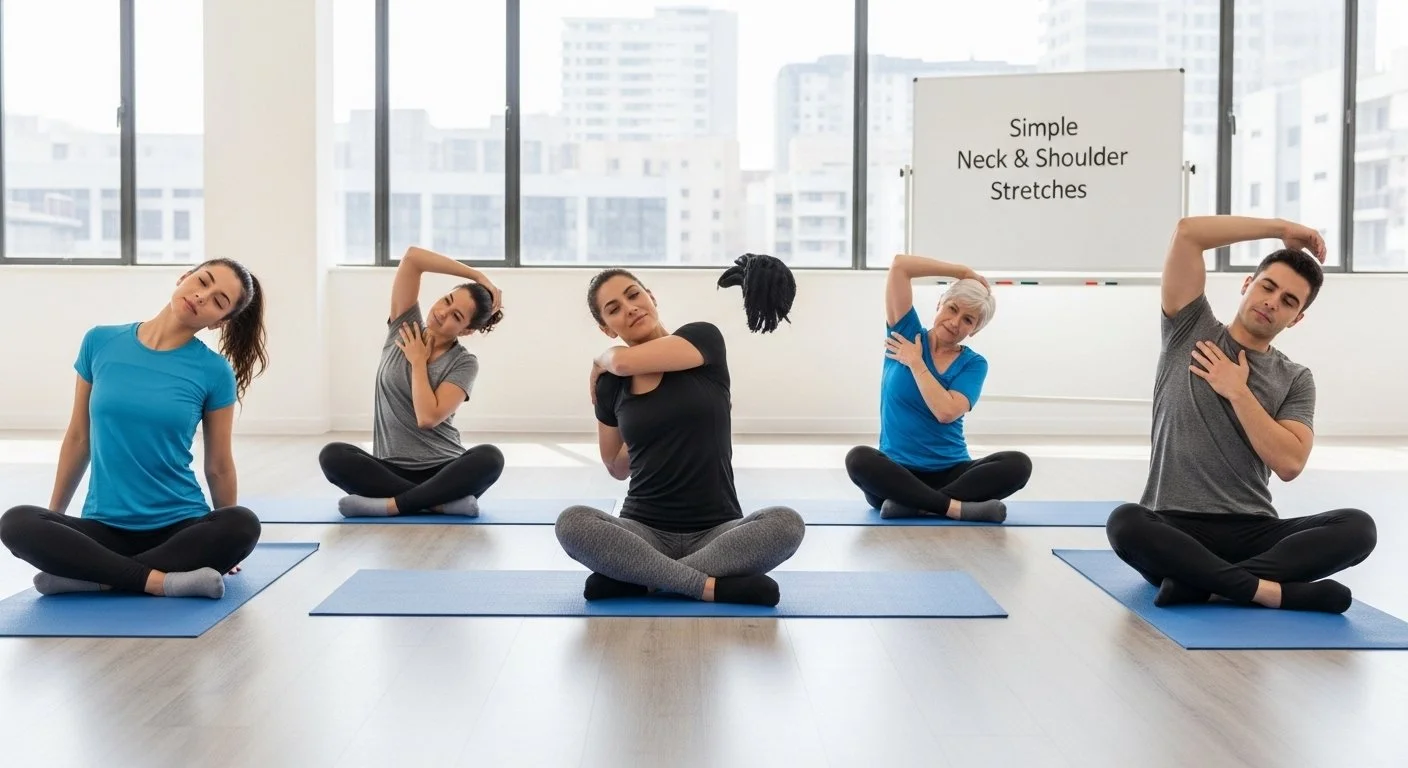
You don’t need a long routine. These few stretches can go a long way if you do them regularly.
1. Gentle Neck Tilt
This is one of the easiest ways to release built-up tension.
How to do it:Sit comfortably and slowly tilt your head toward one shoulder. Don’t force it, just let gravity do the work. Hold for about 15–20 seconds, then switch sides.
What you’ll feel: A stretch along the side of your neck, especially in areas that feel tight after sitting.
2. Chin Tucks Small but Powerful
This one feels subtle, but it’s incredibly important.
How to do it Sit or stand tall and gently pull your chin straight back like you’re trying to make a double chin. Hold for a few seconds, then relax.
Why it matters: It helps reverse that forward-head posture most of us fall into during the day.
3. Shoulder Rolls
Simple, but effective.
How to do it: Roll your shoulders up, back, and down in a slow, controlled motion. Do this 10–15 times.
Why it helps: It loosens tight muscles and brings some movement back into an area that often feels stuck.
4. Chest Opening Stretch
This is especially helpful if your shoulders tend to round forward.
How to do it: Clasp your hands behind your back and gently lift your arms while opening your chest.
What it does: It stretches the front of your body, which helps your shoulders naturally move back into a better position.
5. Upper Shoulder Stretch
Great for those moments when your shoulders feel heavy or tight.
How to do it: Gently pull your head to one side using your hand. Keep it light, no pulling hard.
Best for: Relieving that familiar “tight shoulder” feeling that shows up during the day.
6. Cat-Cow Movement
This isn’t just for your lower back; it's great for your upper body too.
How to do it: On your hands and knees, slowly round your back, then arch it. Move with your breath.
Why it works: It keeps your spine moving and reduces stiffness in your upper back.
What it helps with:Improves shoulder mobility and gently strengthens the muscles that support good posture, helping to support the spine and prevent back pain over time.
How Often Should You Stretch?
You don’t need a full workout session.
A realistic approach:
5–10 minutes a day
A few stretches between tasks
Quick resets during work
Consistency matters far more than intensity.
Shoulder Mobility: The Missing Piece
Stretching is helpful, but movement is just as important.
Simple shoulder mobility exercises like arm circles or light resistance movements help keep your joints working smoothly.
Think of it this way: Stretching relieves tension. Movement prevents it from coming back.
Common Mistakes That Slow Progress
Only Stretching When It Hurts
By the time pain shows up, tension has already built up. Regular stretching works better.
Pushing Too Hard
Stretching shouldn’t feel aggressive. Gentle, steady movement is more effective.
Ignoring Daily Habits
If your posture and movement don’t change, the tension usually returns.
Expecting Immediate Results
Some relief can happen quickly, but lasting change takes consistency.
How to Relieve Neck Tension During the Day
You don’t need to overhaul your routine, just make small adjustments.
Try:
Raising your screen to eye level
Sitting with both feet on the floor
Taking short movement breaks
These small changes reduce the strain that causes the problem in the first place.
Expert Perspective: When Simple Fixes Aren’t Enough
For many people, stretching is enough to reduce everyday tension.
But sometimes, discomfort keeps coming back. That usually means there’s more going on, like muscle imbalances, posture habits, or movement patterns that need a closer look.
In those cases, learning more about how your body moves can be helpful. Resources like the Metro Wellness NYC website offer useful information on posture, movement, and musculoskeletal care if you want to explore further.Building a Routine That Actually Sticks
The best routine is one you’ll actually do.
Instead of trying to fit everything in at once, think small:
A couple of stretches in the morning
A quick reset during work
A few minutes in the evening
That’s enough to start noticing a difference.
Conclusion:

Neck and shoulder tension isn’t something you just have to live with.
Most of it comes from daily habits, and that means it can be improved with daily habits too.
Simple stretches, better posture, and a bit more movement can go a long way over time.
You don’t need to do everything perfectly. Just start small, stay consistent, and pay attention to how your body feels.
If the discomfort sticks around or starts affecting your day-to-day life, it may be worth looking a little deeper or getting guidance tailored to you.
FAQs
1. What stretches help the most with neck and shoulder pain? Gentle neck tilts, chin tucks, shoulder rolls, and chest stretches are some of the most effective when done regularly.
2. How long does it take to feel relief from stretching? Some people feel better right away, but consistent daily stretching usually brings more noticeable results over time.
3. Can I do these stretches at work? Yes, most of these can be done right at your desk without any equipment.
4. Why does my neck keep getting tight? It’s often due to posture, long periods of sitting, or stress-related tension building up throughout the day.
5. Should I stretch even if I’m not in pain? Yes, stretching regularly can help prevent tension from building up in the first place.