Understanding Pain That Does Not Fully Heal After Injury in NYC

most frustrating experiences after an injury is hearing
One of the most frustrating experiences after an injury is hearing, “Everything looks healed,” while your body still says otherwise.
Many people expect pain to disappear once tissue recovery is complete. A sprained ankle heals. A surgical incision closes. A muscle strain improves. Yet pain sometimes remains weeks, months, or even years later.
This leads many patients to ask an important question: why does pain not heal fully?
The answer is often more complex than people expect. Pain is not always a direct reflection of tissue damage. As explored in broader discussions around chronic pain understanding, long-term pain can continue even when healing has technically happened.
Understanding why this happens can reduce fear, improve recovery decisions, and help patients feel more in control.
Healing and Pain Are Not Always the Same Thing
This is one of the biggest misunderstandings in recovery.
Healing refers to tissue repair.
Pain refers to how the nervous system interprets signals.
Those two things often improve together, but not always.
A ligament may heal.
A fracture may close.
An incision may heal.
Yet the nervous system may continue producing pain signals.
That is why pain not going away after healing is more common than many people realize.
Why Pain Does Not Heal Fully
When pain continues after injury, it usually means something in the pain system has changed.
This may involve:
increased nerve sensitivity
ongoing inflammation
protective muscle tension
fear-based movement patterns
nervous system overreaction
This process is part of how nerve pain turns into chronic pain, where the body begins responding differently to normal signals.
Instead of turning the alarm off, it keeps it running.
The Role of the Nervous System
The nervous system is designed to protect the body.
After an injury, it becomes more alert.
That is helpful at first.
But if pain lasts too long, the nervous system may become too sensitive.
This is often called sensitization.
At that stage:
Gentle pressure may hurt
Normal movement may trigger discomfort
Pain may feel bigger than expected
This helps explain why someone may feel pain even after the original injury appears resolved.
Chronic Pain After Tissue Recovery
Many patients feel confused by chronic pain after tissue recovery.
They ask: “If my MRI looks fine, why does it still hurt?”
That confusion is understandable.
The answer is that the body may have healed structurally, but the nervous system may still be acting as if danger exists.
This overlap is especially important when comparing nerve pain vs chronic pain, because nerve irritation sometimes becomes part of a larger chronic pain pattern.
Can Inflammation Continue After Healing?
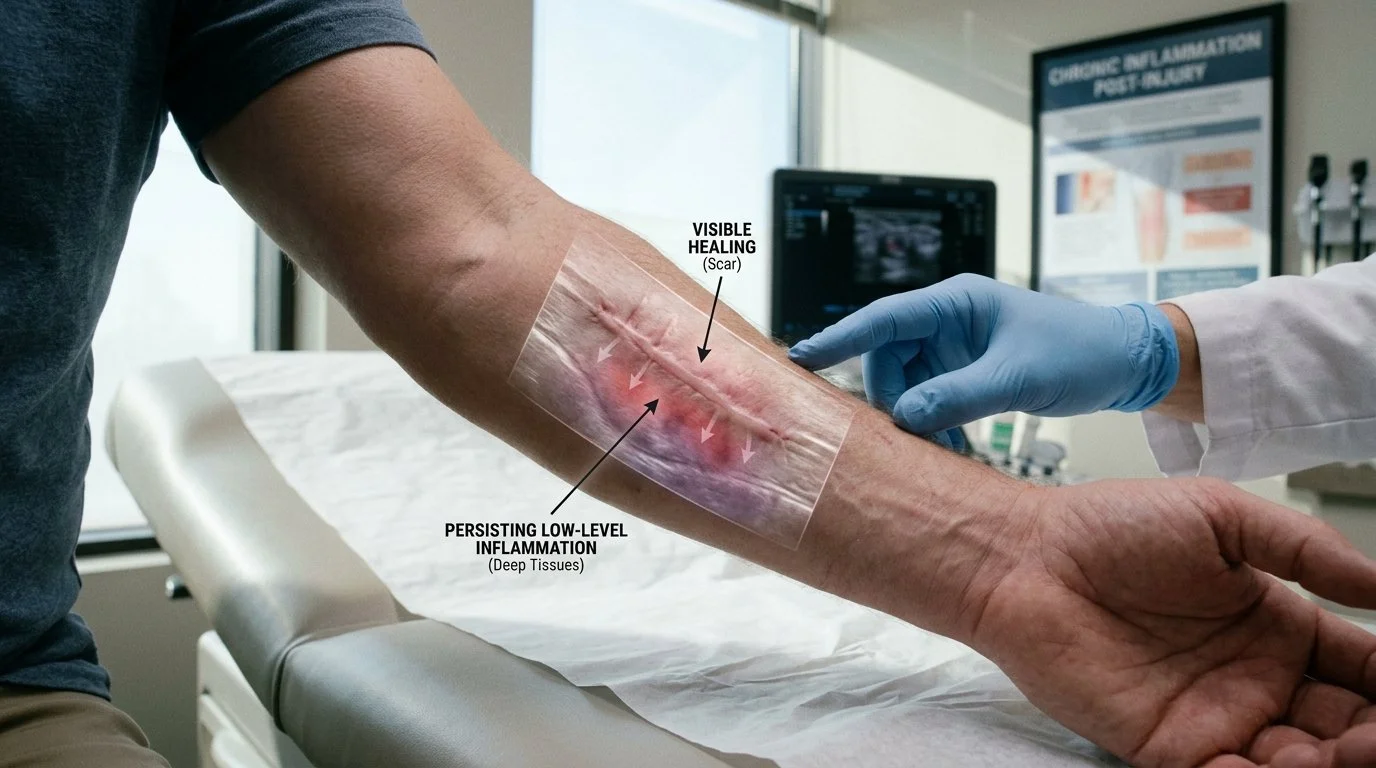
Low-level inflammation
Yes. Low-level inflammation can sometimes persist long after the visible injury improves.
This is often part of chronic inflammation, not healing.
Even when swelling disappears, internal inflammatory signals may continue.
That ongoing irritation can keep pain active.
This is one reason some people feel “almost better” but never fully comfortable.
The Chronic Pain Cycle Explained
Pain often creates its own cycle.
This is known as the chronic pain cycle explanation.
It usually looks like this:
pain → fear → less movement → weakness → more sensitivity → more pain
The body starts protecting itself.
That protection becomes overprotection.
Over time, routine activities feel harder.
This is why many people notice chronic pain and lifestyle limitations long before they understand what is happening.
Why the Body Keeps Feeling Pain
People often ask: Why does the body keep feeling pain when the injury is gone?
Because the brain remembers.
Pain is partly a learned response.
If the nervous system spends months receiving pain signals, it can become better at producing them, which is why many people seek patient-centered chiropractic care to help manage ongoing discomfort and improve mobility.
This does not mean pain is imagined.
It means the pain system has adapted and now needs support to calm down.
Emotional Stress Can Intensify Pain
Stress does not create injury.
But it can amplify pain.
When stress remains high:
muscles stay tense
sleep worsens
inflammation increases
pain sensitivity rises
That is one reason many patients dealing with long-term symptoms also notice fatigue caused by chronic pain.
Pain affects more than the injured area; it affects the whole system.
How Daily Life Starts Changing
Persistent pain rarely affects only one part of life.
It changes routines.
People may:
stop exercising
Cancel social plans
avoid certain movements
feel less independent
Over time, these adjustments can quietly reshape everyday life.
This connects directly to how pain changes daily behavior, where physical pain begins influencing confidence, relationships, and work.
Practical Insights: Common Recovery Mistakes
A few common misunderstandings can delay healing:
Waiting for pain to “just disappear.”
Sometimes it improves naturally, but sometimes it needs guidance.
Avoiding all movement
Too much rest can increase stiffness and weakness.
Focusing only on tissue
Recovery also involves calming the nervous system.
Ignoring small symptoms
Early discomfort sometimes becomes bigger when ignored.
The goal is not panic, it is awareness.
Expert Perspective: Why Understanding the Process Matters

understand why pain does not heal fully
At clinics like Metro Wellness NYC, patient education is often a key part of pain care.
Why?
Because when people understand why pain does not heal fully, fear often decreases, especially for those dealing with ongoing shoulder pain that continues long after the original injury.
And when fear decreases, the body usually responds better.
People make more confident choices.
They move more naturally.
They participate more actively in recovery.
Understanding changes outcomes.
What Recovery Often Requires
Long-term pain often improves through a combination of:
gradual movement
nervous system retraining
better sleep support
stress management
guided rehabilitation
realistic expectations
The goal is not simply symptom suppression.
It is restoring trust between the body and the brain.
Conclusion
Pain that continues after healing can feel confusing, but it is not uncommon.
The body may heal, while the nervous system continues signaling pain.
That is often why pain does not fully heal.
Understanding this changes the conversation.
Instead of asking, “Why am I still hurting?” patients can begin asking, “What does my pain system need now?”
That shift often becomes the first step toward better recovery.
FAQs
Why does pain continue after an injury heals?
Because the nervous system may stay sensitive even after tissue recovery is complete.
Can pain last even if scans look normal?
Yes. Pain and structural healing do not always match.
Is chronic pain after injury common?
Yes. Many people experience long-term pain after an injury, especially if the nervous system becomes sensitized.
Can inflammation continue after healing?
Low-level inflammation can sometimes persist and continue triggering pain.
Can pain improve even after becoming chronic?
Yes. Many people improve with education, movement, and proper long-term care.