How Stress Can Make Your Back Pain Worse: Hidden Connection Explained
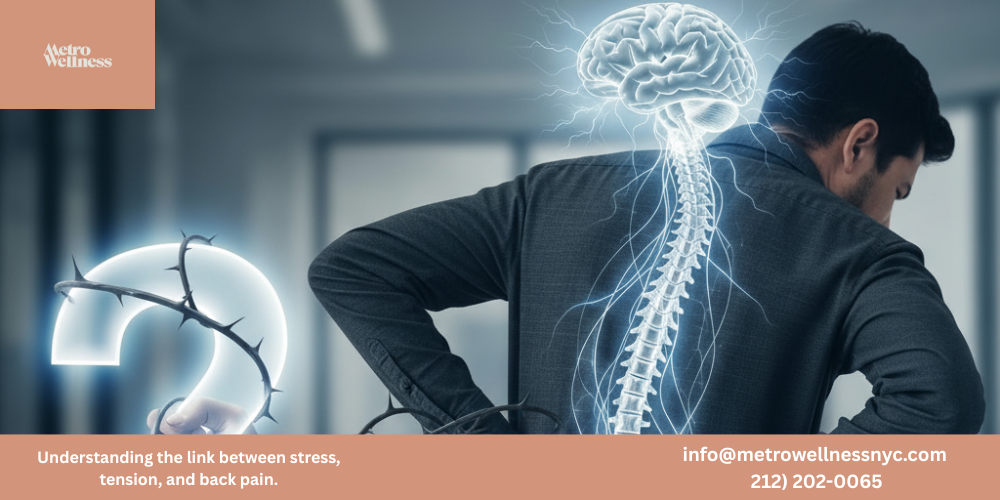
If you’ve ever noticed your back pain getting worse during a stressful week, you’re not imagining it.
Most people think of back pain as purely physical, something caused by posture, injury, or long hours of sitting. And while those factors absolutely matter, they’re only part of the picture, as often discussed on Metro Wellness NYC.
There’s a quieter, often overlooked piece: how stress affects back pain.
Stress doesn’t just stay in your mind. It shows up in your body, in your muscles, your breathing, and even how you move. Over time, that can turn occasional discomfort into something more persistent.
Understanding this connection can change how you approach both stress and pain and help you manage both more effectively.
The Link Between Stress and Back Pain
At first glance, stress and back pain might seem unrelated. But they’re closely connected through the way your body responds to pressure.
Your Body’s Built-In Stress Response
When you’re stressed, your body shifts into a protective mode often called “fight or flight.”
In this state:
Muscles tighten
Breathing becomes shallow
Heart rate increases
This response is useful in short bursts. But when stress becomes ongoing, your body stays in that tense state longer than it should.
That’s where problems begin.
How Stress Affects Back Pain Over Time
1. Chronic Muscle Tension
One of the most direct links between stress and back pain is muscle tension.
When you’re under stress, your muscles, especially in the neck, shoulders, and lower back tend to tighten automatically.
Over time, this leads to:
Stiffness
Reduced flexibility
Ongoing discomfort
This kind of chronic tension in the body often builds gradually, making it harder to pinpoint the exact cause.
2. Changes in Posture
Stress doesn’t just affect how you feel it affects how you carry yourself.
You might notice:
Shoulders creeping upward
A slight forward hunch
Tension through the upper back
These subtle changes can increase strain on your spine, contributing to back pain from stress.
3. Increased Pain Sensitivity
Chronic stress can make your nervous system more sensitive.
This means:
Pain signals feel stronger
Minor discomfort becomes more noticeable
Recovery may take longer
This is one reason why stress-related body pain can feel disproportionate to the physical cause.
4. Reduced Movement
When you’re stressed or overwhelmed, movement often decreases.
You might:
Sit longer without breaks
Skip exercise
Avoid activities that usually help
Less movement leads to stiffness, which can worsen both tension and pain.
5. Disrupted Sleep
Stress often affects sleep quality, and poor sleep can make pain worse.
When sleep is disrupted:
Muscles don’t fully relax
Recovery slows down
Pain feels more intense the next day
This creates a cycle that can be difficult to break.
Why Stress-Related Back Pain Feels Different
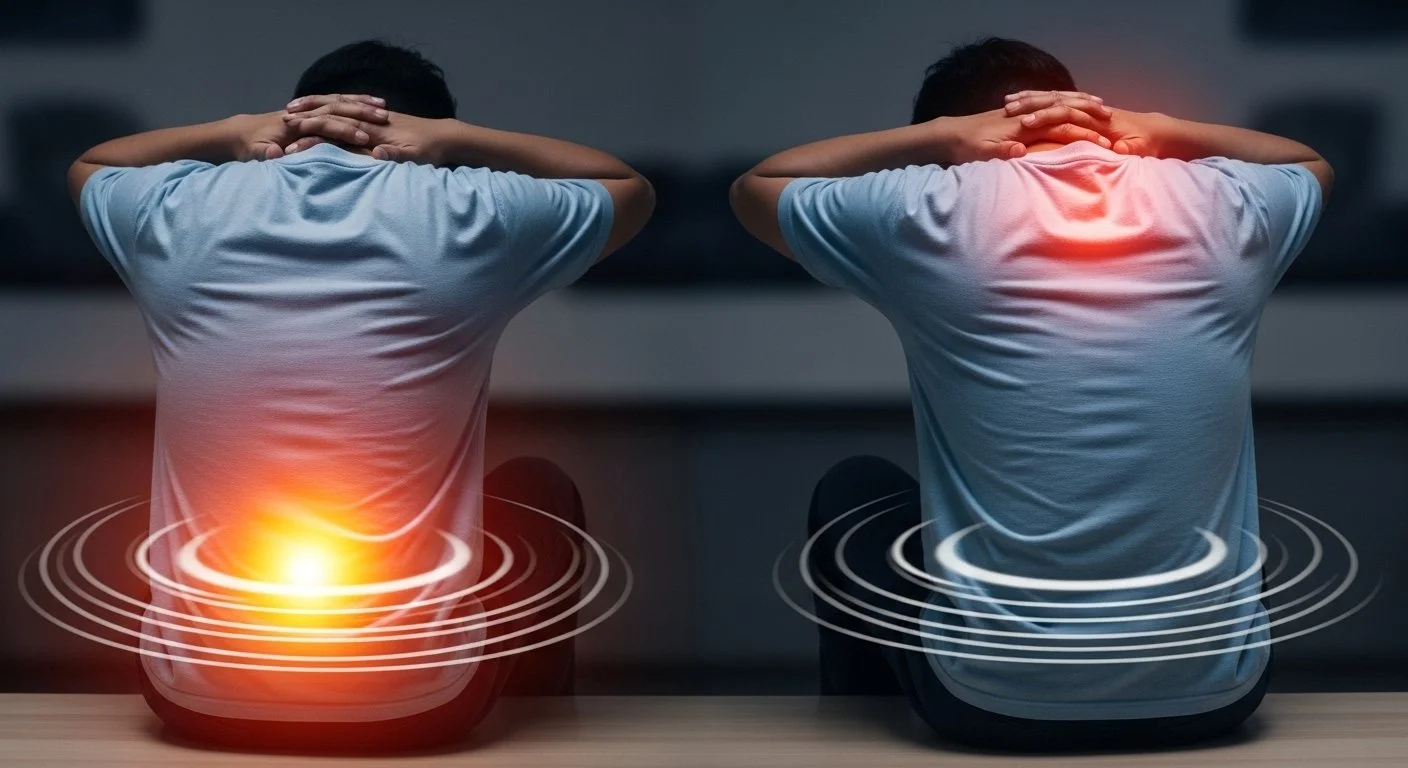
Pain caused or influenced by stress often has a different pattern than injury-related pain, and it’s frequently linked to habits like poor head posture.
People commonly describe it as:
Dull and persistent
Moving between areas (neck, shoulders, lower back)
Worse during busy or overwhelming periods
This doesn’t mean the pain isn’t real; it just means the cause is more complex.
Stress Causing Back Pain: A Common but Overlooked Pattern
Many people spend months trying to fix their back pain by physically adjusting posture, changing chairs, and stretching more without realizing that stress is part of the equation.
That’s why progress sometimes feels inconsistent.
You might feel better physically, but during a stressful week, the pain returns.
Recognizing this pattern is often the turning point.
Practical Ways to Reduce Stress-Related Back Pain
The goal isn’t to eliminate stress; that's not realistic. Instead, it’s about helping your body respond to stress in a healthier way.
1. Release Muscle Tension Regularly
Simple habits can help interrupt tension before it builds up.
Try:
Gentle stretching during the day
Shoulder rolls and neck movements
Short breaks to reset posture
These small actions help reduce stress-related muscle pain.
2. Improve Awareness of Physical Stress Signals
Many people don’t notice tension until it becomes uncomfortable.
Start paying attention to:
Raised shoulders
Clenched jaw
Tight lower back
Awareness allows you to adjust before discomfort increases.
3. Use Breathing to Reset Your Body
Breathing plays a powerful role in how your body handles stress.
Deep, slow breathing can:
Relax muscles
Lower heart rate
Reduce overall tension
Even a few minutes can make a noticeable difference.
4. Keep Moving Even Lightly
Movement doesn’t have to be intense to be effective.
Simple options:
Walking
Gentle stretching
Light mobility exercises
Regular movement helps counteract the stiffness that comes with stress.
5. Support Better Sleep
Improving sleep habits can reduce both stress and pain.
Consider:
Keeping a consistent bedtime
Limiting screen time before sleep
Creating a calm evening routine
Better sleep supports recovery and reduces pain sensitivity.
Common Mistakes People Make
Treating Pain as Only a Physical Problem
Focusing only on posture or exercise without addressing stress often leads to incomplete results.
Ignoring Early Signs of Tension
Mild tightness is often the first signal. Addressing it early prevents it from building up.
Trying to Push Through Stress
Ignoring stress doesn’t make it disappear; it often shows up physically instead.
Expecting Immediate Results
Reducing stress-related pain takes time. Consistency matters more than quick fixes.
Practical Insights: What Actually Helps Over Time
Small resets during the day are powerful Even brief breaks can prevent tension from building
Stress and movement are connected Staying active helps regulate both
Pain patterns often reflect lifestyle patterns Busy or stressful periods tend to increase discomfort
Awareness leads to better control Noticing tension early makes it easier to manage
Expert Perspective: Looking at the Full Picture

Back pain is rarely caused by one factor alone.
It’s usually a combination of:
Physical habits
Movement patterns
Stress levels
Daily routines
That’s why addressing both physical and mental factors leads to better outcomes.
Professionals who work with musculoskeletal health often look beyond the immediate area of pain. They consider how stress, posture, and movement interact, especially in cases of chronic pain.
If you’re exploring ways to better understand your symptoms, resources like the Metro Wellness NYC website offer helpful information on integrated approaches to care.
When to Consider Additional Support
While stress-related strategies can help, it’s important to recognize when additional guidance may be needed.
You might consider seeking support if:
Pain persists despite lifestyle changes
Discomfort interferes with daily activities
Pain becomes more intense or frequent
Understanding the underlying cause can help you move forward more effectively.
Conclusion:
The connection between stress and back pain is real and often underestimated.
Learning how stress affects back pain can change how you approach both issues.
Instead of focusing only on physical fixes, you begin to look at the bigger picture:
How your body responds to stress
How tension builds throughout the day
How small habits influence long-term comfort
The encouraging part is that many of these factors are within your control.
Small, consistent changes like moving more, managing stress, and paying attention to your body can lead to meaningful improvements over time.
If your back pain has been persistent or confusing, this connection may be worth exploring further.
FAQs
1. Can stress really cause back pain?
Yes, stress can lead to muscle tension and increased pain sensitivity, both of which contribute to back discomfort.
2. Why does my back hurt more when I’m stressed?
Stress tightens muscles and makes the nervous system more sensitive, which can intensify pain.
3. How can I tell if my back pain is stress-related?
If your pain worsens during stressful periods and improves when you’re relaxed, stress may be a contributing factor.
4. What helps relieve stress-related back pain?
Gentle movement, stretching, stress management techniques, and better sleep habits can all help.
5. Should I see a professional for stress-related pain?
If pain persists or interferes with daily life, it’s a good idea to seek guidance for a more personalized approach.