What Really Causes Runner's Knee? A Guide for Manhattan, NYC?
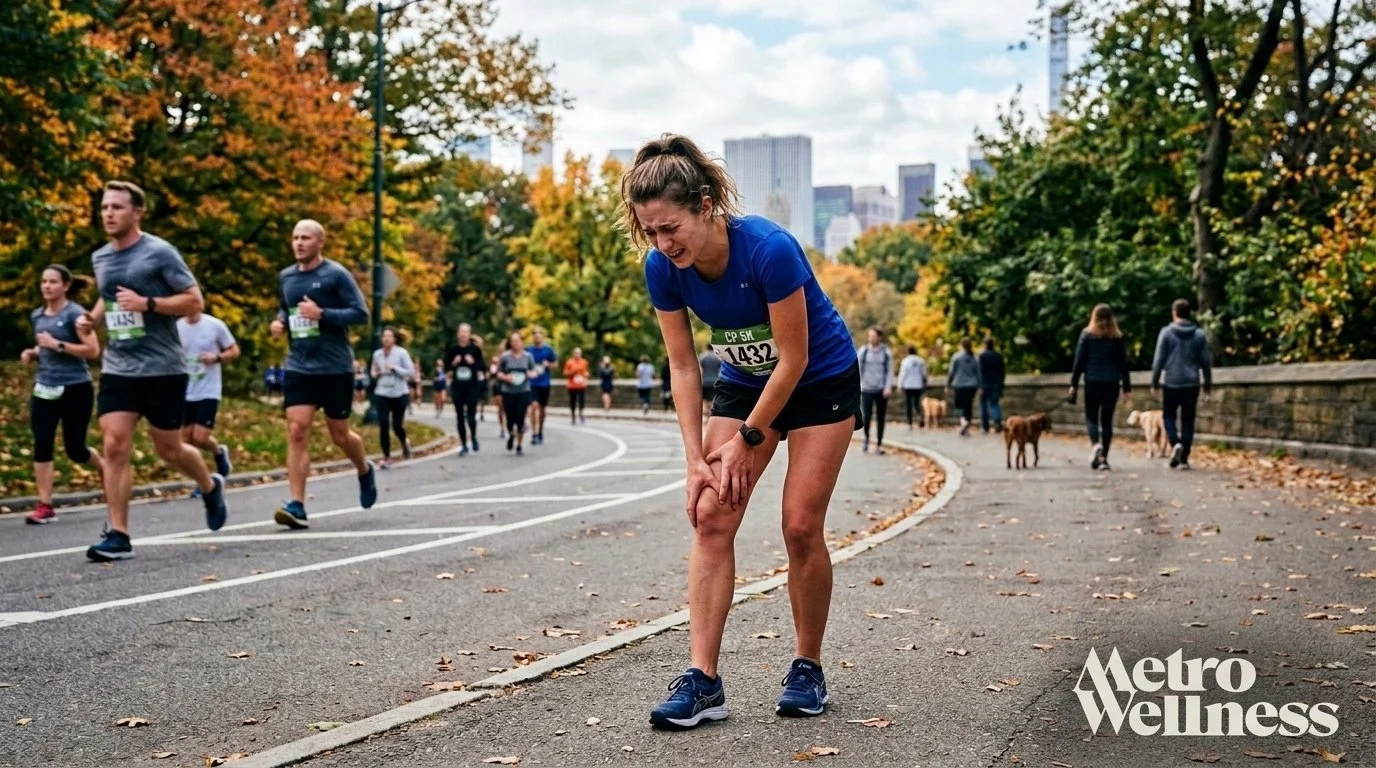
Here's the detail that surprises a lot of people: you don't actually have to be a runner to get "runner's knee." It shows up in cyclists, hikers, people who just started a new gym routine, and plenty of people whose main physical activity is a long day of stairs and subway platforms. The name is a bit of a misnomer, and understanding what causes a runner's knee beyond just "running too much" is usually the key to actually fixing it rather than just resting and hoping it goes away, much like frozen shoulder, which also develops gradually without a clear injury.
If you're training for a fall race along the West Side Highway, or you've simply upped your weekly mileage in Central Park and started noticing an ache behind your kneecap, this guide breaks down what's really happening, what tends to help, and how long it realistically takes to resolve.
What Is a Runner's Knee, Exactly?
Runner's knee is the common name for patellofemoral pain syndrome, or PFPS pain located in and around the kneecap, at the joint where your kneecap (patella) meets your thigh bone (femur). Normally, the kneecap glides smoothly within a groove on the femur as you bend and straighten your knee. With PFPS, that tracking becomes irritated or slightly off, leading to pain that's usually most noticeable during activities that load the front of the knee.
This is one of the most common causes of knee pain among active adults, and it doesn't require a specific injury event to develop. Instead, it tends to build gradually from repeated stress on the joint, much likepain that builds up gradually over time.
What Causes Runner's Knee?
The honest answer is that it's rarely one single factor; it's almost always a combination of training habits and underlying mechanics.
Sudden increases in mileage or intensity. This is probably the most common trigger among runners specifically. Ramping up weekly mileage, adding hill work, or increasing speed too quickly overloads tissue that hasn't been conditioned for the added demand.
Hip and quad weakness. This is one of the most overlooked pieces of the puzzle. Weakness in the hip muscles, particularly the ones responsible for stabilizing the pelvis and thigh, can change how the entire leg tracks during running, which shifts extra load onto the kneecap. Quad weakness has a similar effect, since the quadriceps play a direct role in how the kneecap sits and moves within its groove, reducing activity or avoiding exercise over time,a pattern that shows up with pain-related lifestyle changes more broadly, can quietly contribute to this same kind of muscle weakness.
Repetitive knee movement in general. PFPS isn't limited to running. Cycling, hiking, and repeated stair climbing, something Manhattan apartment living and subway commuting supply in abundance All load the patellofemoral joint repeatedly and can contribute over time.
Training surface and footwear. Consistently running on hard, unforgiving surfaces like concrete sidewalks, combined with worn-out or poorly fitted shoes, adds cumulative stress that softer trails or well-cushioned footwear would otherwise help absorb.
Knee alignment and structural factors. Some people are simply built with a kneecap that doesn't track as smoothly within its groove, independent of any training error. This isn't something you did wrong, it's more about individual anatomy, and it's part of why the same training load affects different runners differently.
Muscle imbalances more broadly. Tightness in the surrounding muscles, particularly the outer thigh (IT band) and calves, can pull the kneecap slightly out of its ideal path during movement.
Runner's Knee Symptoms
The pain pattern tends to be fairly recognizable once you know what to look for:
A dull, aching pain in and around or behind the kneecap, usually at the front of the knee
Pain that worsens with activities that load the front of the knee: running, squatting, climbing or descending stairs, kneeling
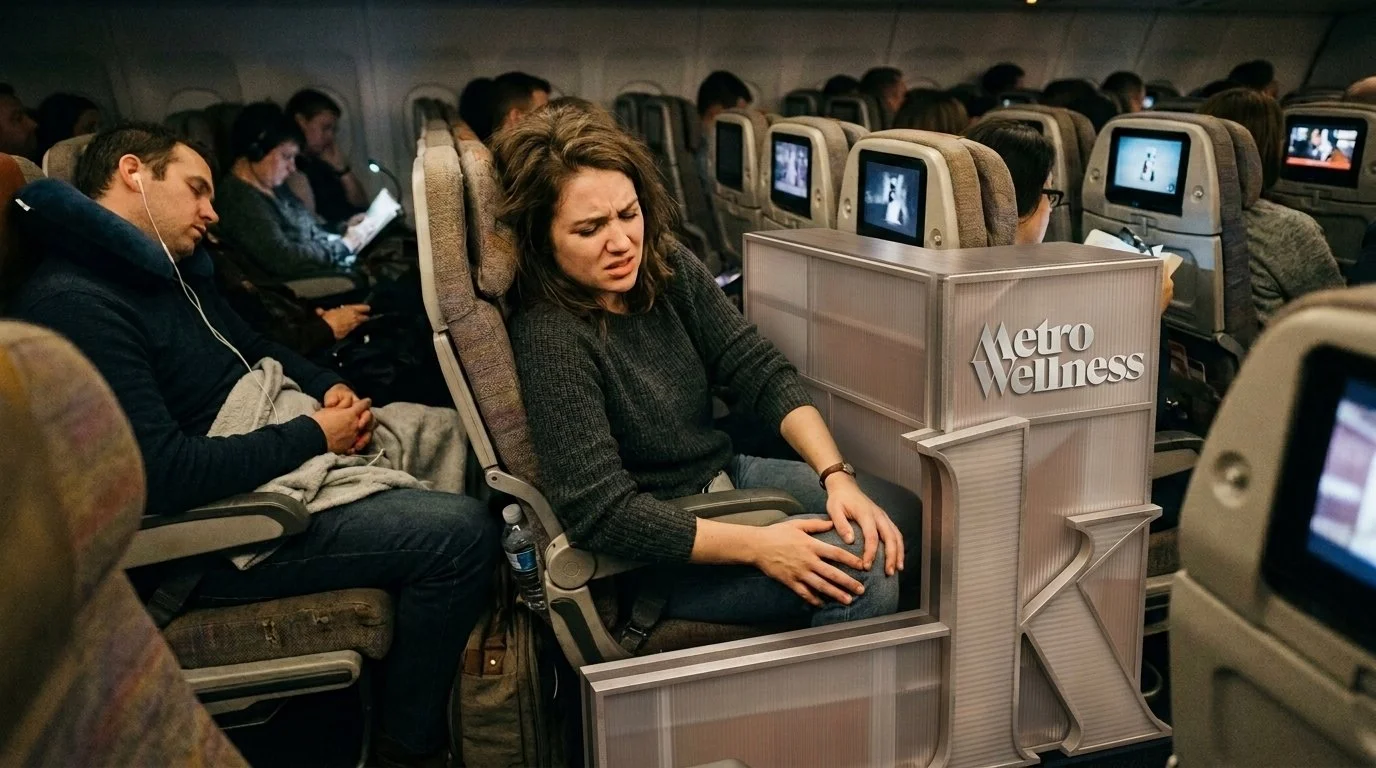
Discomfort after sitting for a long time with the knee bent often called the "theater sign," since it flares up during long movies, flights, or subway rides where the knee stays bent
A rubbing, grinding, or clicking sensation when bending or straightening the knee
Occasional mild swelling, though this isn't universal
If you're noticing locking, significant swelling, or instability where the knee feels like it might give out, that goes beyond a typical PFPS pattern and is worth having evaluated directly, since it could point to a different underlying issue like a meniscus or ligament problem. It's also worth keeping in mind thatpain doesn't always resolve fully once the original tissue has healed, so lingering discomfort even after the knee "looks fine" isn't necessarily something to dismiss on its own.
How Long Does a Runner's Knee Take to Heal?
This is one of the most common questions, and the realistic range is fairly wide. Mild cases often improve within two to three weeks with appropriate activity modification. A typical case tends to run four to six weeks with consistent treatment. More chronic or severe cases, especially ones that have been running through pain for a long stretch, can take several months to fully resolve.
The single biggest factor in how quickly this heals isn't rest alone it's whether the underlying contributor, most often hip and quad weakness, actually gets addressed. Recovery tends to speed up meaningfully once training shifts from just backing off mileage to actively strengthening the muscles that support proper kneecap tracking.
Home Treatment for Runner's Knee
For mild, early-stage symptoms, a few steps genuinely help:
Activity modification, not necessarily complete rest. Reducing or temporarily pausing the specific activities that aggravate pain, often high-mileage running or hill work while staying active through lower-impact alternatives like cycling, swimming, or the elliptical.
Ice after activity. Applying ice for about 15 minutes at a time can help manage inflammation, particularly after any activity that provokes symptoms.
Over-the-counter anti-inflammatory medication. This can help manage pain and inflammation in the short term, though it doesn't address the underlying mechanical cause on its own.
A supportive brace or patellar strap. Some runners find additional kneecap support helpful during the return-to-activity phase, though this is more of a management tool than a fix.
A reasonable, if imperfect, guide during recovery: mild discomfort in the 2-3 out of 10 range that resolves within 24 hours is generally considered acceptable during rehab exercises, while sharper pain or symptoms that linger longer than a day suggest backing off. If symptoms aren't improving with these steps after a few weeks, it's worth having your knee mechanics properly evaluated by ateam that looks at the full picture rather than just the point of pain.
Runner's Knee Exercises That Actually Help
Since hip and quad weakness are such common underlying contributors, targeted strengthening tends to be the most effective long-term treatment, not just rest. Useful exercises typically include:
Clamshells and side-lying leg raises, which target the hip stabilizing muscles that influence how the whole leg tracks during running
Straight-leg raises and quad sets, which build quad strength without loading the knee joint itself
Wall sits and controlled step-downs, which build strength through a range of motion that mimics running mechanics
Glute bridges, supporting the same hip stability muscles from a different angle
Consistency over months, not just during the acute flare-up, tends to matter here. Continuing this kind of strengthening well after pain resolves is one of the more effective ways to prevent it from coming back once training ramps back up, the same reason rest alone rarely resolves repetitive stress injuries like carpal tunnel syndrome without also addressing the underlying mechanical cause.
Physical Therapy for Runners
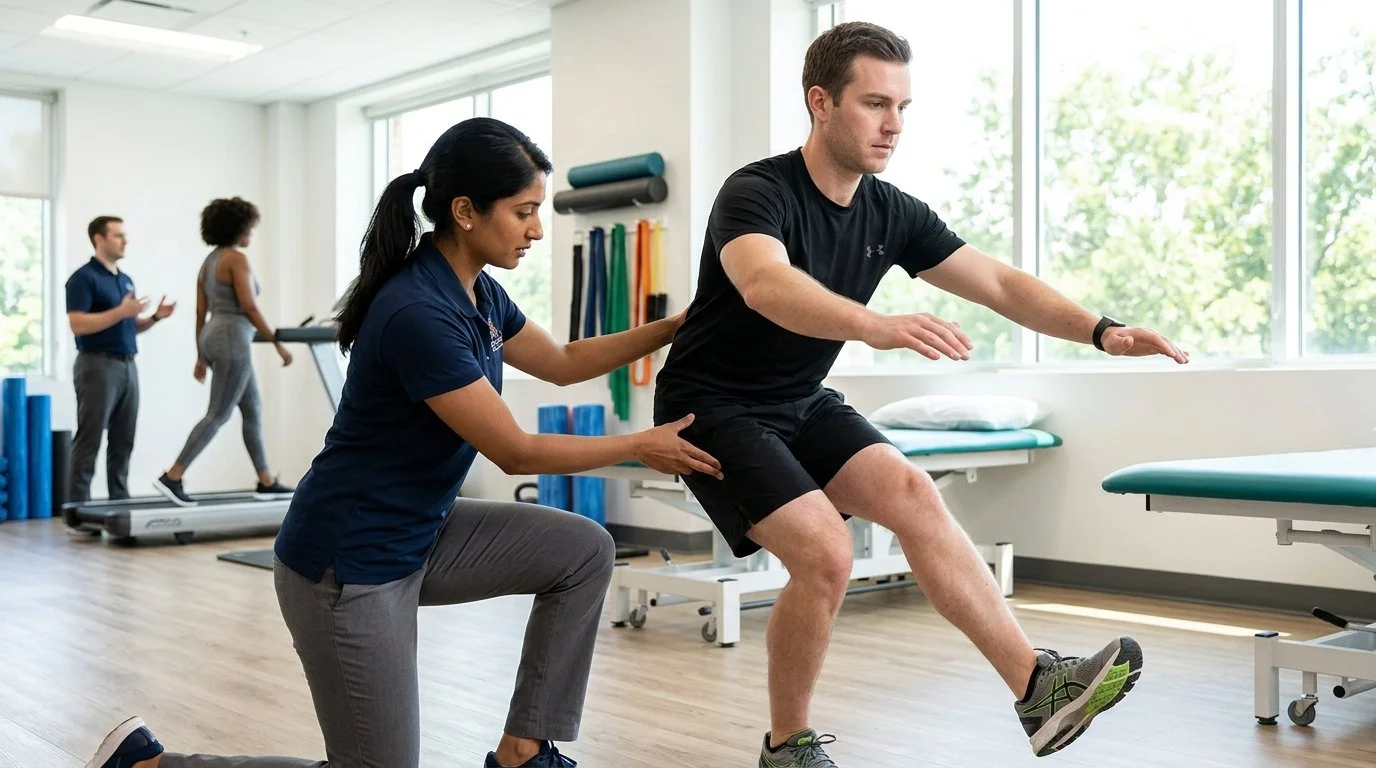
This is where a lot of the real, lasting progress happens, especially for anyone dealing with recurring or more chronic symptoms. Physical therapy for a runner's knee typically starts with an assessment of your specific movement pattern, how your hip, knee, and ankle work together during a squat, a step-down, or even your running gait itself rather than jumping straight to a generic exercise sheet. From there, a progressive strengthening and mobility program is built around your specific weaknesses and movement compensations.
This individualized approach matters because two runners with the exact same "runner's knee" diagnosis can have very different underlying causes: one might have significant hip weakness, and another might have tight calves changing their landing mechanics. Treating both with an identical generic plan often gets slower, less complete results thana whole-body approach that addresses the root causerather than treating symptoms alone.
How to Prevent Running Injuries Like This One?
A few habits meaningfully reduce the odds of developing PFPS in the first place:
Increase weekly mileage gradually rather than in large jumps, particularly when training for a race
Include hip and quad strengthening as a regular part of your routine, not just cardio-based training
Replace running shoes regularly, since worn-out cushioning changes how impact is absorbed
Vary your running surface when possible, since constant hard pavement adds up over time
Don't skip warm-ups, and include some dynamic stretching before higher-intensity runs
Common Mistakes People Make
Running through the pain, hoping it works itself out. Continuing high-impact training on an already irritated joint tends to prolong symptoms rather than resolve them.
Only resting, without addressing strength. Rest reduces pain temporarily, but if the underlying hip or quad weakness that caused the strain hasn't improved, symptoms often return as soon as training resumes at the same level.
Returning to full training too quickly. Pain improving doesn't necessarily mean the underlying biomechanical issue has been fully corrected. Continuing strengthening work for a stretch after symptoms resolve helps prevent the same pattern from recurring.
Treating every case the same way. Because the underlying contributors vary so much between individuals, a generic recovery plan sometimes misses the actual driver of someone's specific symptoms.
Conclusion
A runner's knee develops from a combination of training load, movement mechanics, and often underlying hip or quad weakness not simply from "running too much." It's genuinely common among active people in Manhattan, given the mix of hard pavement, stairs, and busy training schedules, and the good news is that it responds well to the right combination of activity modification and targeted strengthening.
If your knee pain has been building for more than a couple of weeks, isn't improving with basic rest and ice, or keeps coming back once you resume training, it's worth having your movement mechanics properly assessed rather than continuing to guess at the cause on your own. You canbook an appointmentto get a proper evaluation and a plan built around your specific mechanics.
FAQs
1. What is the main cause of runner's knee?
It's usually a combination of factors, sudden increases in mileage, hip and quad weakness, and repetitive knee loading rather than one single cause.
2. How long does a runner's knee take to heal?
Mild cases often improve within two to three weeks, typical cases take about four to six weeks, and more chronic cases can take several months, especially if the underlying weakness isn't addressed.
3. Can I keep running with runner's knee?
Generally, high-impact running should be reduced or paused while symptoms are active, though low-impact cross-training like cycling or swimming can often continue.
4. What exercises help runner's knee the most?
Hip-strengthening exercises like clamshells and glute bridges, along with quad-focused exercises like straight-leg raises and controlled step-downs, tend to address the most common underlying causes.
5. Do I need physical therapy for my runner's knee?
Not always for mild cases, but for recurring or more chronic symptoms, physical therapy that assesses your specific movement pattern often leads to more lasting results than generic home exercises alone.
